Solitaire
Every classic solitaire deal, free and instant in your browser — Klondike, Spider, FreeCell, Pyramid, Tri Peaks, Golf, Yukon and Forty Thieves. Nothing to download, no account, and your progress stays on your device.
- Playable
 Solitaire Classic
 - Playable
 Klondike Solitaire
 - Playable
 Spider Solitaire
 - Playable
 FreeCell
 - Playable
 Pyramid Solitaire
 - Playable
 Tri Peaks Solitaire
 - Playable
 Golf Solitaire
 - Playable
 Yukon Solitaire
 - Playable
 Forty Thieves Solitaire
 - Playable
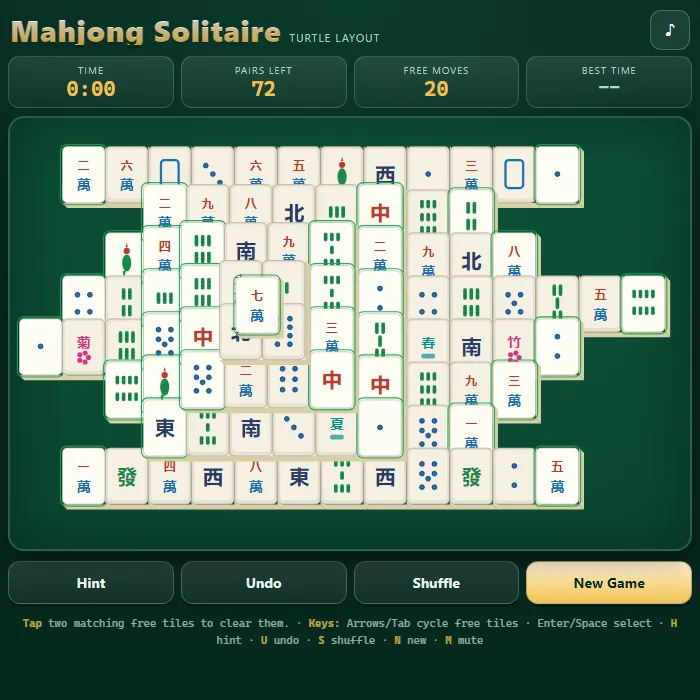 Mahjong Solitaire
 - Playable
 Mahjong Connect
 - Playable
 Hearts
 - Playable
 Spades
 - Playable
 Gin Rummy
 - Playable
 Crazy Eights
 - Playable
 Dominoes
 - Playable
 Dice Duel
Where to start
Solitaire Classic
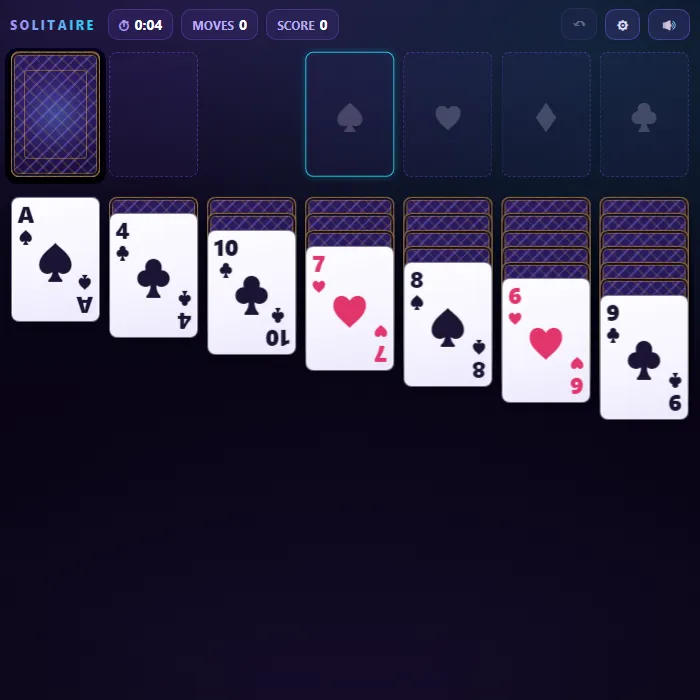
Klondike — the one people mean when they say "solitaire". Draw from the stock, build the four foundations from ace to king, and use the seven tableau columns as your workspace. Roughly four deals in five are winnable, so a loss usually means there was a line you missed.
Spider Solitaire
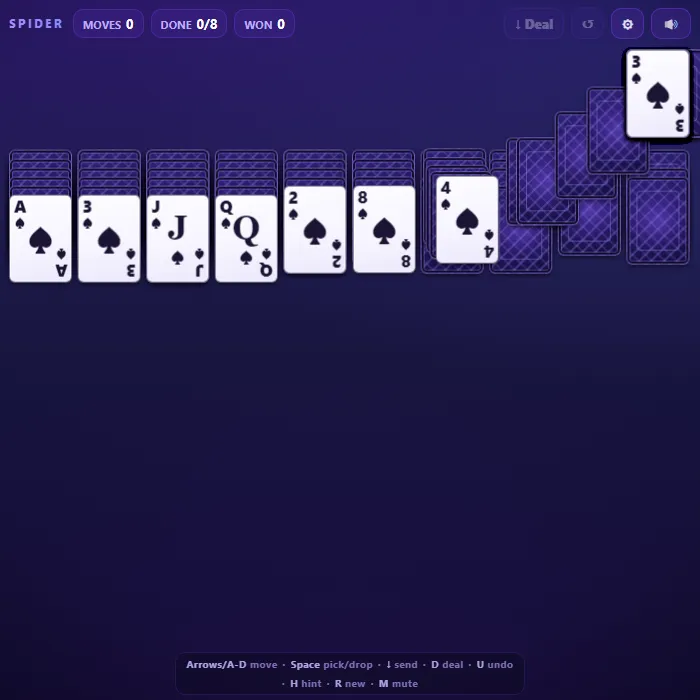
Two decks, ten columns, and sequences you build down in suit until a full king-to-ace run clears itself off the board. Start on one suit while you learn the shape of it; two and four suits are a genuinely different game.
FreeCell
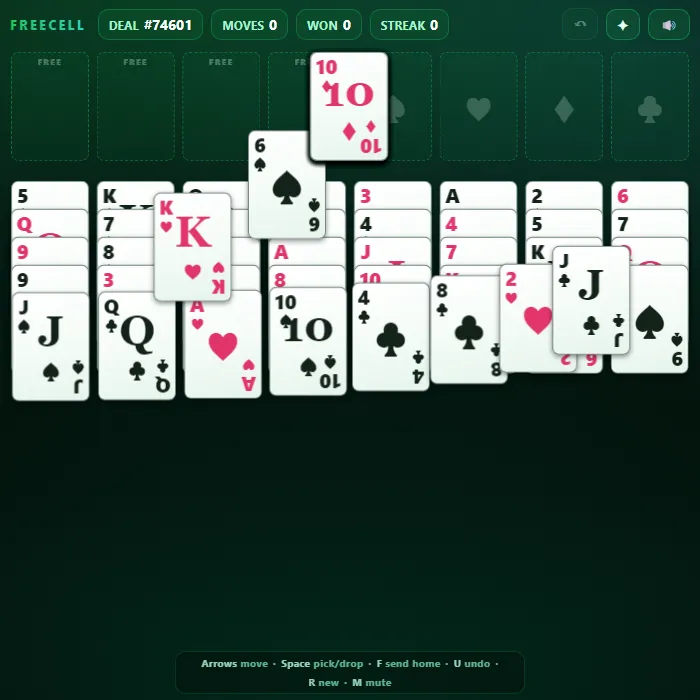
Every card is face up from the first move, and almost every deal is winnable — which makes this the thinker's solitaire. The four free cells are temporary parking, and how many you leave empty decides how long a sequence you can move.
Pyramid Solitaire
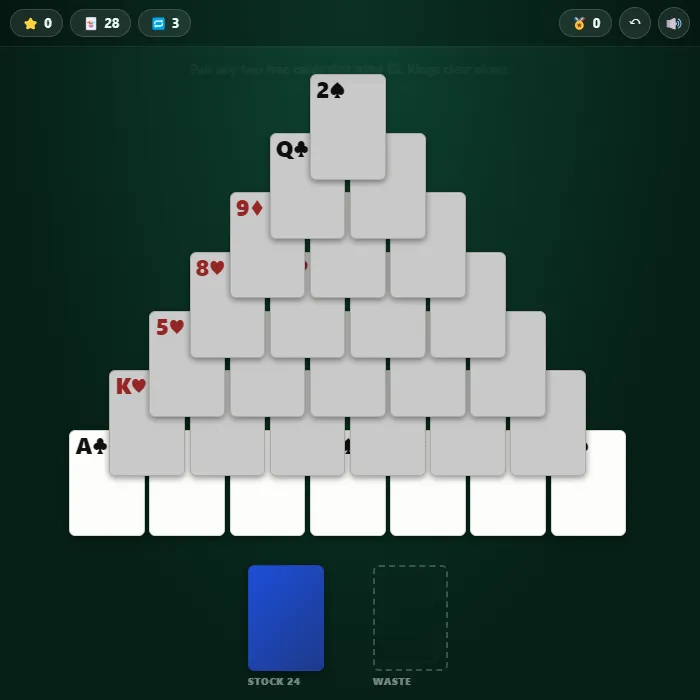
Pair cards that add up to 13 and strip the pyramid from the bottom up. Kings go on their own. Short, sharp rounds, and the skill is in reading which pairs you'd strand by taking the obvious one first.
Tri Peaks Solitaire
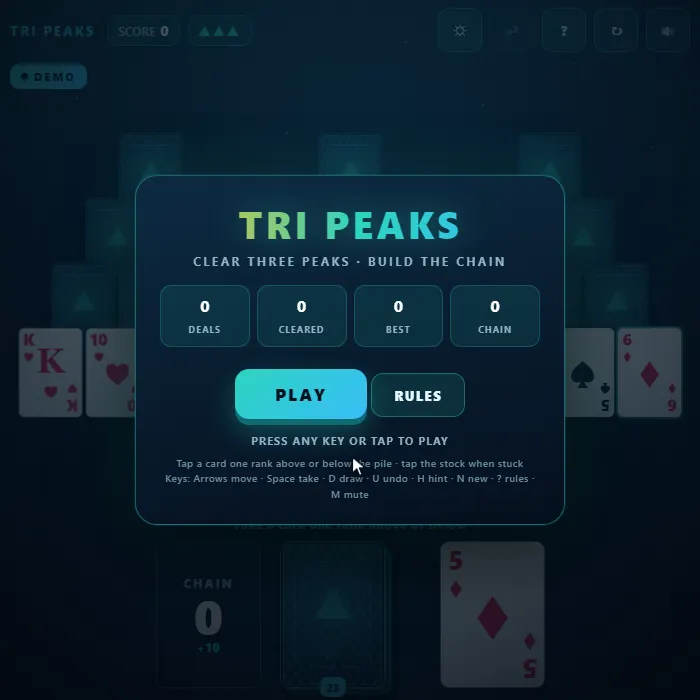
Clear three overlapping peaks by picking cards one above or one below the waste pile. Long chains build fast, which makes it the quickest solitaire here — most rounds are over inside a few minutes.
Mahjong Solitaire
Tiles instead of cards: match free identical pairs and take the layout apart from the outside in. Free means nothing on top and one long side clear, which is the whole skill — thinking two layers ahead.
Klondike Solitaire
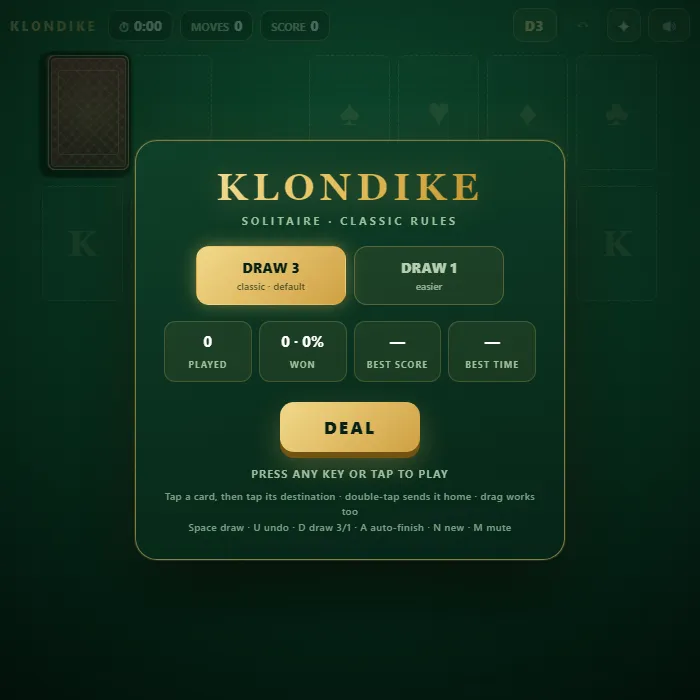
Klondike with the full ruleset: draw three from the stock, keep score, and flip to draw-one if you want the gentler game. The same deal plays very differently under each — draw-three is the version the purists mean.
Golf Solitaire
Play cards one rank above or below the waste and try to clear the board; whatever is left counts as strokes. Nine deals make a course, so a bad hole is recoverable — the quickest, most snackable solitaire here.
Gin Rummy
The two-player classic against a computer opponent that actually watches your discards. Build runs and sets, knock when your deadwood is low, and play a full match to a hundred points.
Which solitaire should you play?
They share a deck and almost nothing else. Pick by the kind of thinking you're in the mood for.
- Klondike — the classic. Some luck of the deal, quick to pick up, satisfying to finish.
- FreeCell — pure logic. Nearly every deal is solvable, so a loss is on you, not the shuffle.
- Spider — the long game. One suit is gentle, four suits will keep you busy for a while.
- Pyramid — arithmetic and pattern reading, in short rounds.
- Tri Peaks — the fastest. Chain cards together and clear three peaks against the clock of your own patience.
- Golf — Tri Peaks' even quicker cousin. Clear seven columns one rank up or down at a time, and count what's left as strokes.
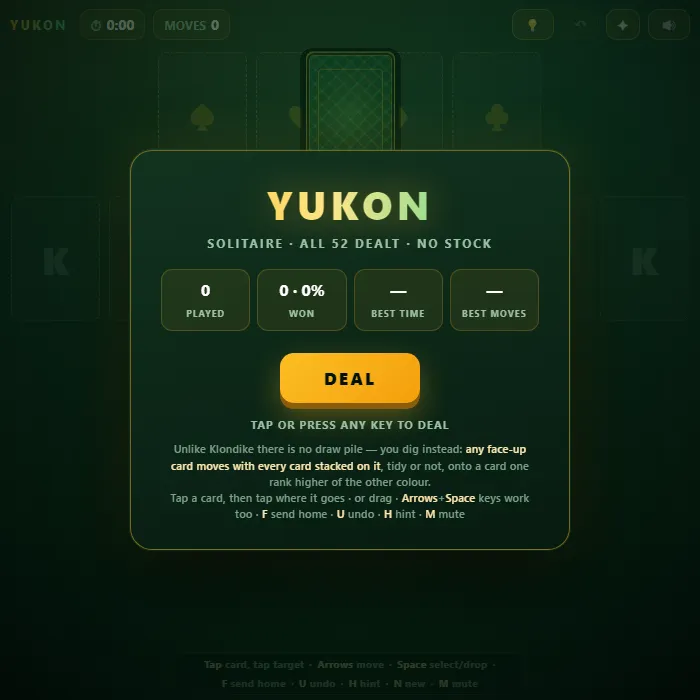
- Yukon — Klondike with no stock and messy group moves. Every card is dealt from the start, so it is all excavation.
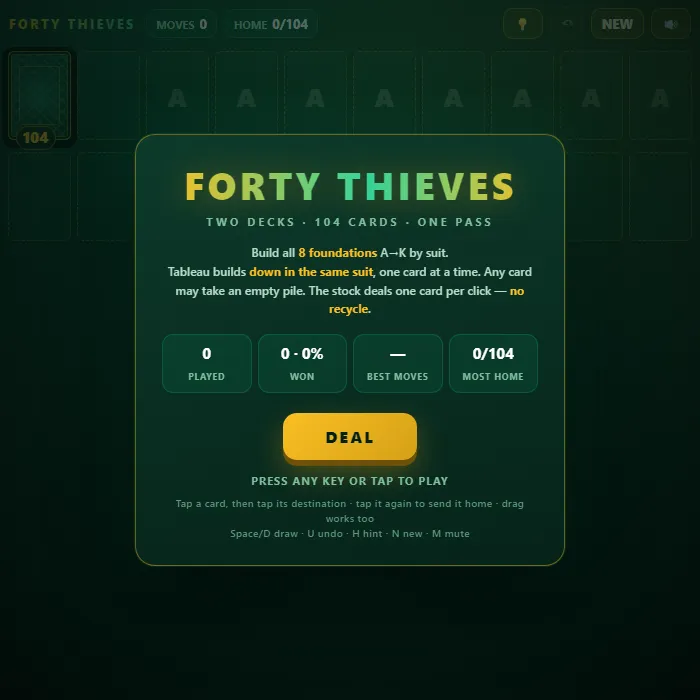
- Forty Thieves — two decks, same-suit builds and one pass through the stock. The hardest game on this page by some distance.
- Mahjong Solitaire — the same matching instinct, played on tiles instead of cards.
Rules of Klondike solitaire, briefly
Deal seven columns, the first with one card and the seventh with seven, each with only the top card face up. The rest becomes the stock.
Build the four foundations up by suit from ace to king. Build the tableau columns down in alternating colours — a red six goes on a black seven. A run of cards moves as one unit if it is already in sequence.
Only a king can go into an empty column, which is why emptying one is worth planning for rather than stumbling into. Turn the stock when you run out of moves, and remember that flipping a face-down card is usually worth more than a tidy-looking merge.
Other card games worth a round
Solitaire is the single-player end of the deck. If you'd rather play against someone, the rest of the grid above covers it: Hearts and Spades are the classic trick-taking pair, Gin Rummy is the head-to-head duel of draws and knocks, Crazy Eights is the fast one everyone already knows, and Dominoes and Dice Duel swap the cards out entirely.
All of them run in the same browser tab with nothing to install, so switching between them costs you a click.
Playing on a phone, tablet or Chromebook
Every game here is HTML5, so it runs on whatever browser you already have — no Flash, no plugin, no app store. On a phone the layouts stack for a portrait screen and cards respond to a tap rather than a drag.
Because they're ordinary web pages, they also load on managed devices like school and work Chromebooks, where installing anything is usually blocked.
Frequently asked questions
Is this solitaire really free?
Yes, completely. No payment, no trial, no premium tier and no account. Ads keep it free.
Do I need to download anything?
No. Every game opens and plays in your browser tab. There is nothing to install and no plugin to enable.
What is the difference between Klondike, Spider and FreeCell?
Klondike is the standard one-deck game with a stock you draw from. Spider uses two decks and asks you to build descending runs in suit until a full sequence clears. FreeCell deals every card face up and gives you four free cells to park cards in, so it rewards planning over luck.
What is the difference between Klondike and Yukon solitaire?
They look alike but play differently. Klondike keeps most of the deck in a stock you draw from; Yukon deals all 52 cards at the start and lets you move any face-up card with everything stacked on top of it, in sequence or not. Klondike is about managing the draw, Yukon about untangling the board.
Are all solitaire deals winnable?
It depends on the game. Almost every FreeCell deal is solvable — famously all but one of the original 32,000. Klondike is closer to four in five, and Spider on four suits is harder still.
Does it work on a phone or tablet?
Yes. The layouts adapt to portrait screens and cards respond to taps, so no desktop and no mouse is needed.
Is my progress saved?
Anything a game remembers is stored in your own browser on your device. Clearing your browser data clears it, and nothing is tied to an account.
Can I play solitaire at school or work?
These are ordinary web pages with nothing to install, so the game itself is never the obstacle. Whether any site opens depends on the network's content filter, which each school or workplace configures for itself.
Keep reading
If you want the longer write-up rather than the grid:
- Klondike Solitaire: rules, scoring and strategy — why hidden cards set the order you dig, when to hold a card back, and the draw-3 stock trick.
- Pyramid Solitaire: the pairs that make 13 — the six pairs, why to look underneath before the easy pair, and what the three stock passes are for.
- Spider Solitaire: rules and strategy — why empty columns decide every game, when to deal, and what changes from 1 suit to 4.
- FreeCell: rules and the supermove formula — how many cards you can really move, which cards to dig out first, and why a loss is always a wrong move.
- Types of solitaire: Klondike vs Spider vs FreeCell — Decks, win rates, minutes per game and luck-vs-skill for seven variants, side by side.
- Hearts, Spades, Gin Rummy and Crazy Eights — four card games worth actually learning
- Free puzzle games — the same unhurried feeling, without a deck
- All games — the full catalogue